
Article By John Trabulsi
August 20, 2026 2:00 pm EDT
2026 World Cup Hampered by U.S Visa and Entry Restrictions
While the World Cup has received record-breaking viewership and garnered sold out stadiums worth of fans, American immigration policy has marred what is supposed to be a global celebration for fans, officials, and staff alike.
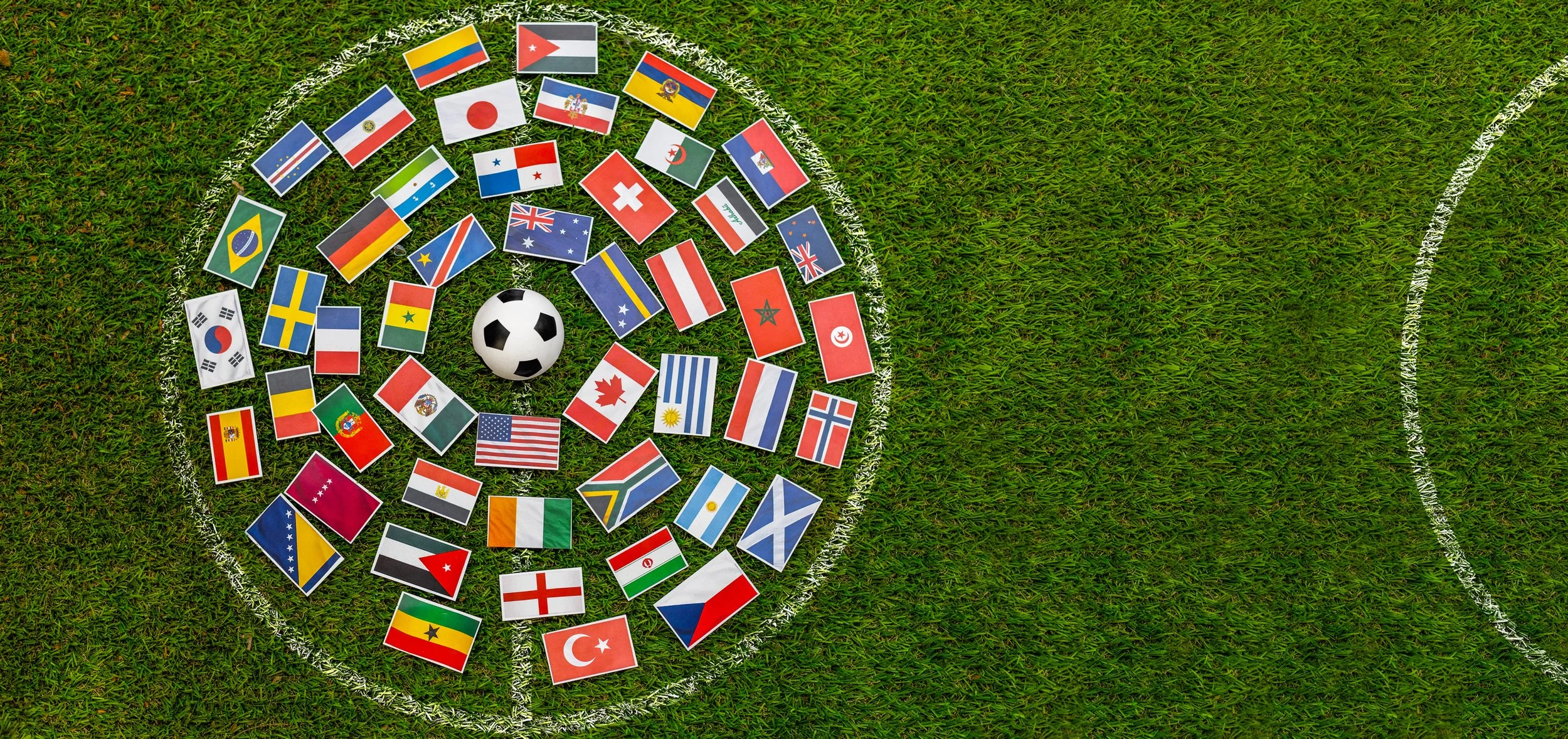
Image courtesy of Leonardo Moreno/Getty Images. All rights reserved.
The 2026 World Cup has been an indisputable success for the Federal International Football Association (FIFA) and the United States. Digital engagement up until the quarterfinals has reached 20 billion views across platforms, and host stadiums have operated essentially at full capacity, racking up 99.7 percent occupancy levels and 6.25 million attending fans. For the United States, co-hosting the World Cup has invigorated culture and passion for football, and the US men’s team round-of-16 loss to Belgium was the most viewed non-NFL telecast since Game 7 of the 2016 World Series, peaking at 41 million viewers.
At the same time, staff and fans from select countries have faced disproportionate challenges with entry into the United States. On April 23, the American Civil Liberties Union (ACLU) joined more than 120 civil society organizations in issuing a travel advisory that accused the Trump administration of championing a “draconian immigration and anti-human rights agenda” and warned that World Cup fans, players, and officials could face denial of entry to the United States, arrest, detention, or deportation. Massachusetts immigration attorney Celine Atallah shared similar concerns in an interview with BBC World Service for a June 2026 report on visa and entry challenges faced by World Cup fans, stating "The visa system is the invisible gatekeeper of the World Cup…FIFA can sell a ticket, but the US government decides who gets a visa, and CBP [Customs and Border Protection] decides who actually enters."
Somali referee Omar Artan, who spent eight years on FIFA’s international referees list and was named Men’s Referee of the Year by the Confederation of African Football (CAF) in 2025, was selected by FIFA to officiate at the 2026 World Cup. Upon arrival, Artan was denied entry on June 6th at Miami International Airport, despite having been issued a U.S. visa. U.S. Customs and Border Protection initially cited unspecified “vetting concerns,” while an unnamed Trump administration official later alleged that Artan had an “association with suspected members of terror organizations,” according to CBS News. The outlet did not identify the official and reported that the nature and extent of the alleged association were unclear. The administration has yet to publicly release evidence supporting the allegation. U.S. Customs and Border Protection initially cited unspecified “vetting concerns,” while an unnamed Trump administration official later alleged that Artan had an “association with suspected members of terror organizations,” according to CBS News. The outlet did not identify the official and reported that the nature and extent of the alleged association were unclear. The administration has yet to publicly release evidence supporting the allegation.
Shortly after Artan was denied entry, Somalia’s Ministry of Youth and Sports worked with the country’s Ministry of Foreign Affairs and Office of the President in an unsuccessful diplomatic effort with U.S. authorities and FIFA to resolve the matter. On June 10, Somalia’s Foreign Ministry said it “deeply regrets” the U.S. decision and would continue seeking clarification from relevant authorities. Ciise Aden Abshir, a senior adviser to Somalia’s Ministry of Youth and Sports, told The Washington Post that Artan’s denial of entry into the U.S. had “shuttered” a national dream and argued that the World Cup “should be given to a country that gives everybody equal opportunity.” Artan returned to a hero’s welcome in Mogadishu, as fans and government officials alike greeted him at the Aden Adde International Airport. Artan told reporters at the airport that what happened to him was “fate” and urged young Somalis not to lose hope.
FIFA’s official statement regarding Artan on June 8 noted that FIFA itself was “not involved in host country immigration processes, including visa adjudications” and that a host government ultimately determines who receives a visa and who is admitted into the country. Two days later, at a FIFA World Cup opening press conference in Mexico City, FIFA President Gianni Infantino addressed Artan’s denial of entry, calling it “unfortunate” and saying the organization had tried to find solutions but had to respect that it was not “the kings of the world” who could rule over governments and police forces.
Iran’s delegation faced some of the World Cup’s most complicated visa and entry issues, and the team’s participation in the tournament was further complicated by the ongoing U.S.-Iran war, which contributed to political tensions and a late decision to move its planned base from Arizona to Tijuana, Mexico. Iran Football Federation (FFIRI) President Mehdi Taj said FIFA approved the move to Tijuana after meetings with FIFA and World Cup officials in Istanbul and a May 22 virtual meeting with FIFA Secretary General Mattias Grafström. Iranian Ambassador to Mexico Abolfazl Pasandideh said on June 6 that the team had been told it would have to enter and leave the U.S. on the same day as they were playing. “We can enter in the morning and we must leave the same day,” said Pasandideh
Iran’s players were eventually granted U.S. visas on June 5, just 10 days before their opening match against New Zealand in Los Angeles, but several FFIRI officials and staff members, including Taj, were ultimately denied visas. The visa denials followed Secretary of State Marco Rubio’s June 2 statement at a House appropriations hearing that U.S. officials would closely scrutinize visa applications from Iran’s World Cup delegation and deny entry to anyone linked to the Islamic Revolutionary Guard Corps.
The FFIRI also said its ticket allocation for supporters at the team’s three U.S. group-stage matches had been withdrawn, leaving the federation unable to distribute tickets to its fans. FIFA, which controls World Cup ticketing, said it was working with the federation to find “compliant solutions” for Iranian supporters. But two days later, FIFA said discussions with the FFIRI were continuing over "outstanding matters," without specifying whether the ticket-allocation issue had been resolved.
A BBC World Service analysis of US State Department data found that 11 of 48 countries—Ecuador, Egypt, Haiti, Algeria, Uzbekistan, Cape Verde, Jordan, Iran, the Democratic Republic of the Congo, Ghana, and Senegal— that qualified to compete in the World Cup had visa rejection rates above 40 percent, well above the average refusal rate of around 34 percent for the tourist and business visas that fans were encouraged to apply for. The analysis also found that some World Cup qualified countries, such as Haiti and Iran, faced full suspensions on visa issuance, while Senegal and Côte d’Ivoire were subject to partial suspensions that included B-1/B-2 visitor visas. Those restrictions were imposed by a presidential proclamation signed by President Donald Trump on December 16, 2025, which expanded U.S. entry restrictions for nationals of several countries. The proclamation included exceptions for World Cup athletes, coaches, and necessary team personnel, but did not include a categorical exception for fans.
Fans from countries listed in the Visa Waiver Program, a program that enables citizens or nationals of participating countries to travel to the US for stays of 90 days or less without a visa, have also experienced issues. For example, Scottish supporter Michael Wright received notice that his Electronic System for Travel Authorization (ESTA) status switched from “approved” to “not authorized” while he was in the airport, without an explanation as to why.
In a June 2 discussion hosted by the Migration Policy Institute, a Washington, D.C.-based nonpartisan think tank focused on immigration policy, veteran sports journalist Albert Samaha said World Cup fans from parts of Africa, Asia, and South America could face long visa-processing times, high travel costs, and no guarantee of approval even after purchasing match tickets. Moreover, fans applying through the standard U.S. visitor-visa process could face long waits, leaving some to spend money on flights and hotels before knowing whether their visas would be approved.
At a press conference on August 30, 2025 in Nairobi following a meeting with the presidents of the Confederation of African Football’s 54 member associations, FIFA President Gianni Infantino said “everyone will be welcome” at the 2026 World Cup and assured reporters that the visa process would be “smooth” enough for qualifying teams to travel with their fans. However, that promise did not fully materialize, as fans, players, and officials from several countries in the Global South faced visa denials or were refused entry into the U.S. altogether. While President Infantino promised a welcoming sentiment surrounding the 2026 World Cup, FIFA ultimately lacked enforceability over the Trump Administration to provide equitable access for fans and players.
During FIFA’s World Cup Final Reception at Trump Tower on July 17, President Donald Trump called the tournament “the most successful sporting event, maybe in the history of the world” and said it had “really brought the world together.” Infantino told guests at the same event that the tournament had “exceeded all expectations” and called it the “greatest FIFA World Cup of all time.” Conversely, Jules Boykoff, a political science professor at Pacific University and author of Red Card: The 2026 World Cup, Sportswashing and the FIFA Greed Machine, told NPR that he viewed the tournament as a “massive paradox,” stating that “on one hand, it has more teams than ever participating. On the other hand, because of the policies of the Trump administration, it looks more like a World Cup of exclusion than inclusion.” Boykoff’s assessment of the World Cup is a more fitting description of the 2026 World Cup than the image of the tournament that both Trump and Infantino tried to portray.
In the end, the administration’s actions toward fans, players, and officials spoiled an otherwise successful 2026 World Cup for many of the people who were supposed to be a significant part of it.
Author Bio: John Trabulsi is a graduate student in the Master of Public and International Affairs program at the University of Pittsburgh, where he studied Spanish, Portuguese, and Latin American Studies as an undergraduate.