
Article By Zachary Burden
August 5, 2026 12:25 pm EDT
Oprah Winfrey’s South African Girls’ Academy to End Operations in 2027
The academy’s 52-acre campus will transfer to the Gauteng Department of Education, which is expected to continue operating it as a school.
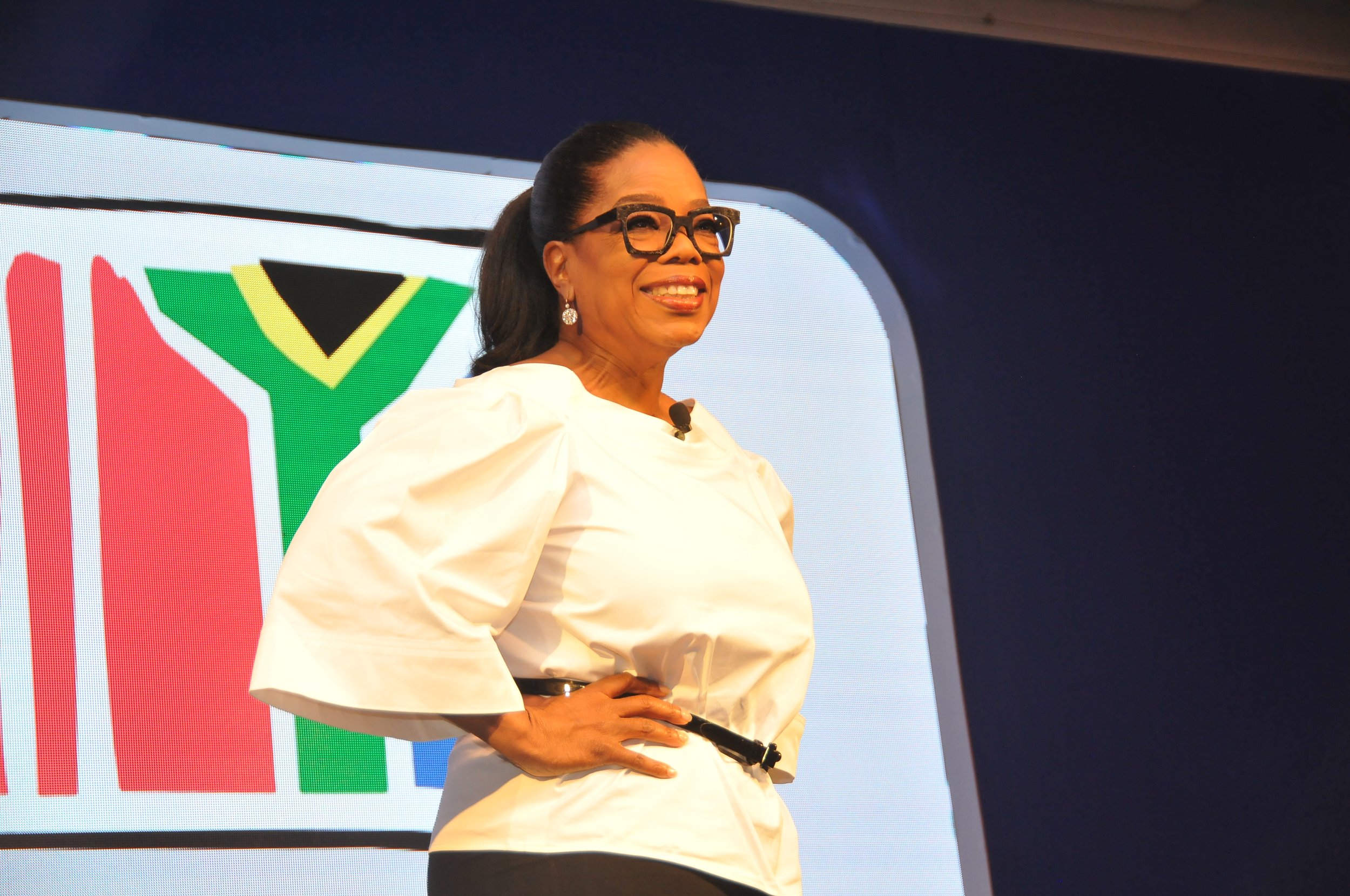
Oprah Winfrey speaks at a U.S. Embassy event for young women in South Africa on Dec. 2, 2016. Photo: US Embassy South Africa
The Oprah Winfrey Leadership Academy for Girls (OWLAG) will end its operations at the conclusion of the 2027 academic year, nearly two decades after opening in 2007 in Henley-on-Klip, south of Johannesburg, in Gauteng province. The school’s 52-acre campus and operations will then transition to the Gauteng Department of Education under the terms of the original agreement behind the academy.
Winfrey announced the transition on July 29, 2026, stating that OWLAG will end its operations after its final two classes graduate. The Gauteng provincial government will assume control of the campus, which a representative for Winfrey said will continue operating as a school under local authorities.
Students in the academy’s final two graduating classes will remain at OWLAG, while any students who have not yet graduated when its operations end will transfer to other schools with their tuition fully funded by Winfrey through graduation. Gauteng education officials have also said students will receive uninterrupted financial and educational support during the transition.
Winfrey’s educational work in South Africa will continue through an expanded national scholarship program that will place academically talented girls from disadvantaged communities at leading schools across the country. The shift away from educating students at a single residential campus is expected to double the number of girls receiving educational support, according to a representative for Winfrey.
“The dream was never simply to build a school. It was to invest in the limitless potential of young women,” Winfrey said in the July 29 statement announcing the transition.
In 2000, Nelson Mandela invited Winfrey and her longtime partner, Stedman Graham, to stay at his home in South Africa for 10 days. During the visit, Winfrey told Mandela that she hoped to one day build a school in South Africa. Mandela contacted then-Education Minister Kader Asmal that same day and arranged for Winfrey to meet with education officials about the idea; those discussions eventually led to what would become OWLAG.
By the time the academy opened in January 2007, Winfrey had invested approximately $40 million of her own money in the 52-acre campus. OWLAG opened with 152 students and included 21 classrooms, six science and computer laboratories, a 10,000-volume library, student residences, athletic facilities, a 600-seat theater, a wellness center, a yoga studio, and a beauty salon. The Washington Post reported at the time that the scale and amenities of the $40 million campus had drawn attention in South Africa, where many public schools lacked basic resources. Newsweek also reported that the academy had faced criticism over what some viewed as excessive spending on a single school. Winfrey defended her decision to create a highly resourced campus, arguing that the environment itself was part of what she wanted to provide for students from disadvantaged backgrounds.
“These girls deserve to be surrounded by beauty, and beauty does inspire,” Winfrey told Newsweek shortly after the school opened.
OWLAG’s Class of 2025 consisted of 44 students, all of whom passed South Africa’s National Senior Certificate examinations with results that qualified them to apply for bachelor’s-degree programs at universities. The class recorded a 76 percent overall average.
The Oprah Winfrey Charitable Foundation currently reports that 528 young women have graduated from the academy, with graduates going on to attend universities in South Africa, the United States, and Europe, including Spelman College, Oxford, and Stanford. The academy’s inaugural graduating class completed its studies in 2012.
Within OWLAG’s first year of operation, students accused Tiny Virginia Makopo, a matron at the school, of sexual and physical abuse. Winfrey traveled to South Africa to meet with students and parents, publicly apologized, and commissioned an independent investigation. Makopo was later prosecuted and acquitted of the charges in 2010.
Born into poverty in rural Mississippi, Winfrey experienced sexual abuse beginning at age nine. She later attended a better-resourced suburban school and earned a scholarship to Tennessee State University. She has repeatedly pointed to education as one of the opportunities that changed the course of her life and influenced the kind of environment she wanted to create for girls at OWLAG.
Winfrey went on to build The Oprah Winfrey Show into a national media brand and accumulated much of her wealth through the program, Harpo Productions, the Oprah Winfrey Network, and film projects. In 2026, Forbes ranked Winfrey first among its 250 greatest living self-made Americans, a ranking based on financial success, obstacles overcome, and enduring impact. Forbes currently estimates her net worth at approximately $3.4 billion.
Author Bio: Zachary Burden is a junior at Boston College pursuing a double major in political science and economics. He serves as Co-Head of the Opinions section of The Gavel and as a Greeting Captain for the Student Admission Program.