
Latin America | Peru | Elections
Article By Veronica Martin
April 12, 2026 7:30 AM EDT
The Youth Vote in Peru’s 2026 Presidential Election
More than 27 million Peruvians will cast their ballots in the 2026 presidential election, which could leave the country with its ninth president in ten years, with young voters poised to potentially play a decisive role.
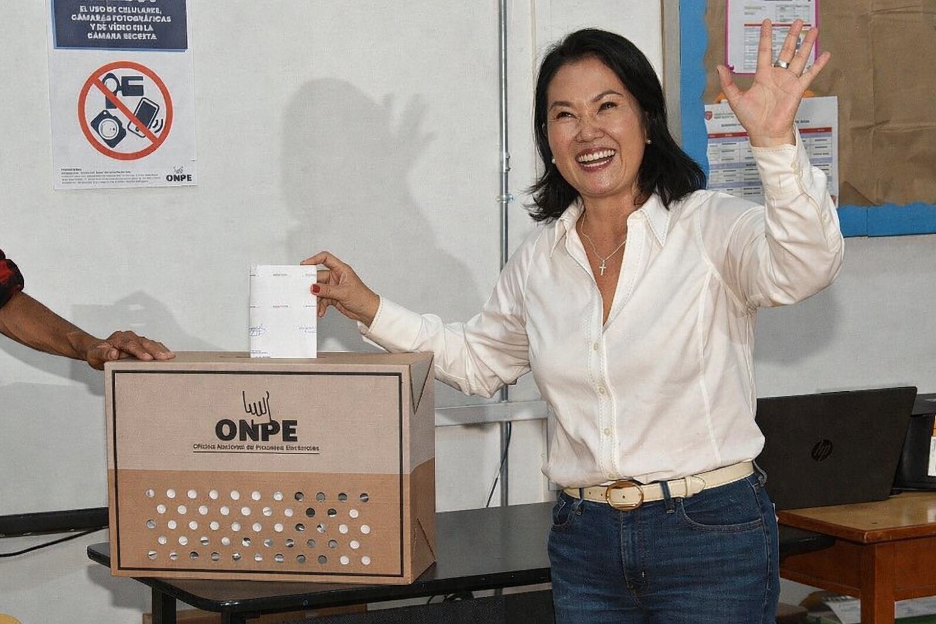
Keiko Fujimori, presidential candidate in Peru’s 2026 election. Photo: Directorio Legislativo.
In February, Congress removed President José Jerí from office amid corruption allegations tied to undisclosed meetings with two Chinese businessmen. He had taken office only months earlier, in October, after his predecessor, Dina Boluarte, was impeached for moral incapacity. Peru has now had eight presidents in ten years, one of the highest presidential turnover rates in the world. In this year’s election, 35 candidates are competing for the chance to become Peru’s ninth president. Candidates polling above five percent include Keiko Fujimori of the Fuerza Popular party and Rafael López Aliaga of the Renovación Popular party, both of whom are on the political right and have made violent crime a central issue in their campaigns.
Fujimori is running for president for the fourth time under the shadow of her father, former President Alberto Fujimori (1990-2000), who was convicted in 2009 of human rights abuses, embezzlement, and illegal wiretapping. His legacy, however, remains politically complicated. Despite his conviction, many Peruvians still credit him with curbing hyperinflation, expanding social programs, and overseeing economic growth. That legacy continues to shape views of Keiko Fujimori, whose previous presidential defeats still weigh on her candidacy, even though Fuerza Popular holds the largest bloc in Congress.
López Aliaga, on the other hand, has drawn attention for his combative style and hard-line anti-corruption message. As mayor of Lima, he enters the race with a strong political base in Peru’s largest city, making him a formidable rival to Fujimori. Unlike his opponent, however, López Aliaga’s base of support is concentrated among older, urban, male, and educated voters, whereas Fujimori’s strength lies in rural districts and among the urban poor. His militaristic approach to fighting crime and admiration for El Salvador’s President Nayib Bukele, who once called himself the world’s “coolest dictator,” have made him a controversial figure in Peruvian politics. Allegations of money laundering and a series of questionable public remarks have further damaged his public image.
What may matter most in this year’s election is not only the crowded field of candidates, but the size of the country’s young electorate. According to the National Jury of Elections, voters under 30 make up 26 percent of the electorate, the largest voting bloc in the country. Of Peru’s 27.3 million eligible voters, 6.9 million are between the ages of 18 and 29, and 2.5 million are potential first-time voters. These figures are noteworthy because this election will determine more than just the presidency. For the first time since 1992, Peru will return to a bicameral legislature after a 2024 constitutional reform reversed the unicameral system, allowed the immediate re-election of lawmakers, and repealed the 2019 ban on consecutive congressional terms. In this election, therefore voters will choose not only a president, but also senators, deputies, and vice presidents. For young Peruvians, that means their votes will help determine the outcome of more races than in previous elections.
The growing concentration of young voters has generated both excitement and concern, especially in parts of the country where access to election information is more limited. According to the National Jury of Elections, voters under 30 account for roughly a quarter of the electorate, and high shares of young voters are found in parts of the Amazon, including Alto Amazonas in Loreto, Bagua in Amazonas, and Coronel Portillo in Ucayali. This has raised concerns that geographic isolation and weak infrastructure in these regions could make it harder for young voters to access clear and reliable information about candidates and the voting process. Social media and emerging technologies such as artificial intelligence could help expand access to election information for younger voters, though those same tools also carry risks of disinformation.
The concern, therefore, is not only how many young Peruvians will vote in this election, but how well equipped they are to navigate an unusually demanding ballot. In an election with a crowded presidential field and a newly expanded legislative ballot, access to reliable information could shape how effectively this large bloc of voters exercises its political influence. Whether those voters are able to move through that complexity with confidence may matter just as much as their raw numbers.
As young Peruvians prepare to cast their ballots at a moment of institutional change, political fragmentation, and an increasingly right-leaning presidential race, it remains to be seen what role they will play in shaping the country’s future.
Author’s bio: Veronica Martin is a senior at the University of Texas at Austin studying Government and History. Her interests focus on Latin American foreign affairs, corruption, and democracy.