
Africa Studies | United Nations
Article By Abryana Kevelier-Williams
March 31, 2026 9:00 am EDT | Updated June 22, 2026
U.N. Resolution Declares Transatlantic Slave Trade the Gravest Crime against Humanity
The Ghana-led measure passed by a wide margin, giving African and Caribbean governments new ground to argue that historical recognition must be tied to reparations.
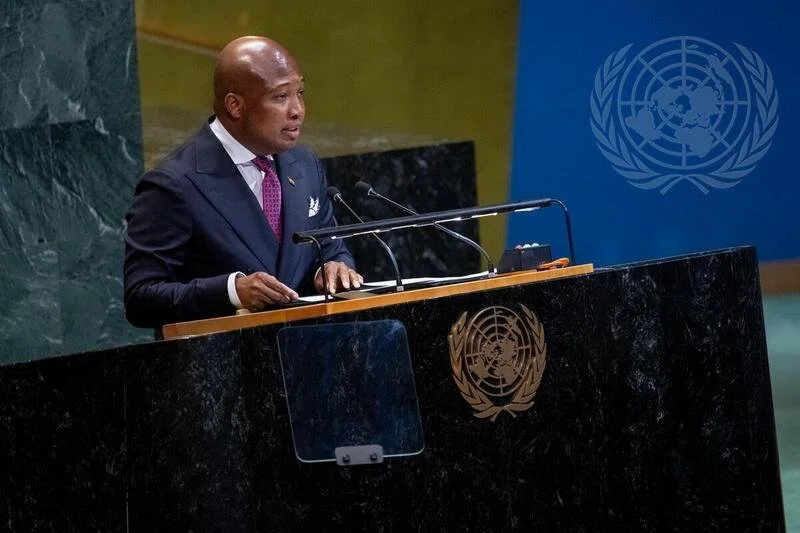
Samuel Okudzeto Ablakwa, Ghana’s Minister for Foreign Affairs, introduces the resolution at the U.N. General Assembly on March 25. UN Photo/Manuel Elías.
NEW YORK, NY — On March 25, 2026, the United Nations General Assembly adopted a Ghana-led resolution declaring the trafficking of enslaved Africans and the racialized chattel enslavement of Africans as the “gravest crime against humanity.” The resolution, officially titled Declaration of the Trafficking of Enslaved Africans and Racialized Chattel Enslavement of Africans as the Gravest Crime against Humanity, passed with 123 countries voting in favor, three voting against, and 52 abstaining.
Introduced by Ghana and backed by African and Caribbean states, the measure comes after decades of pressure from African, Caribbean, and diaspora leaders to address slavery, colonialism, and their continuing consequences through reparative justice. Argentina, Israel, and the United States voted against the resolution, while the United Kingdom, all 27 members of the European Union, and other Western-aligned countries were among the 52 abstentions.
Although the resolution is not legally binding, its adoption gives formal U.N. recognition to demands advanced by African and Caribbean governments, civil society groups, and advocates for reparative justice. Ghanaian President John Dramani Mahama described the resolution as a “pathway to healing and reparative justice”, saying the vote would help keep the history of slavery and the transatlantic slave trade from being forgotten.
What the Resolution Says
The resolution condemns the trafficking of enslaved Africans and racialized chattel enslavement, slavery, and the transatlantic slave trade as “the most inhumane and enduring injustice against humanity.” It declared the trafficking and racialized chattel enslavement of Africans as the “gravest crime against humanity,” citing its scale, duration, brutality, systemic nature, and lasting consequences. The text links those consequences to present-day inequalities, saying the legacies of slavery and the transatlantic slave trade persist through structural racism, racial inequality, underdevelopment, marginalization, and socioeconomic disparities affecting Africans and people of African descent. It also says slavery and colonialism continue to cause cultural disruption, economic exploitation, emotional trauma, and discrimination.
On reparations, the resolution calls on member states to engage in good-faith dialogue on reparatory justice, including formal apologies, restitution, compensation, rehabilitation, guarantees of non-repetition, and changes to laws, programs, and services that address racism and systemic discrimination. The text calls for the return of cultural property, artifacts, manuscripts, documents, and national archives taken from countries of origin.
The resolution also ties reparatory justice to education, memorialization, archival work, and public awareness by encouraging member states to support educational programs, memorialization initiatives, and scholarly research on slavery, the trafficking of enslaved Africans, racialized chattel enslavement, and their consequences, including through school curricula, museums, heritage sites, and public awareness campaigns.
Ghana’s Role in Advancing the Resolution
Ghana led the effort that brought the resolution before the General Assembly, with President John Dramani Mahama addressing member states ahead of the vote on behalf of the African Group. Ghanaian officials argued that the scale, duration, brutality, and continuing consequences of the transatlantic slave trade required stronger recognition at the international level.
Ghana’s role in advancing the resolution is connected to its years of outreach to the African diaspora, including through historic sites such as Cape Coast Castle and Elmina Castle, which have drawn descendants of enslaved Africans to Ghana. More recently, the government-backed Diaspora Summit 2025 and the June 2026 reparatory justice conference in Accra brought diaspora engagement into present-day debates over memory, restitution, and reparative justice.
For Ghana and other supporters, the resolution was not only a symbolic act of remembrance, but part of a push to move international discussions toward accountability, including reparations, cultural restitution, and institutional reforms tied to the legacy of slavery and colonialism
How Did We Get Here?
By the time Ghana brought the resolution before the General Assembly in 2026, African, Caribbean, and diaspora leaders had spent decades pressing international institutions to address slavery and colonialism as unfinished questions of justice. In the early 1990s, Nigerian businessman and political figure Chief Moshood Abiola helped push reparations onto the Pan-African agenda, chairing the OAU-backed Group of Eminent Persons on Reparations to Africa and Africans in the Diaspora. At a 1993 Pan-African conference sponsored by the Organization of African Unity and its reparations commission, the Abuja Proclamation called for reparations for African enslavement, colonization, and neo-colonization, while urging countries that benefited from slavery and the slave trade to provide debt relief, compensation, and other forms of redress.
In the Caribbean, the reparations movement later gained an institutional framework through CARICOM, with historian Sir Hilary Beckles becoming one of its most visible advocates as chair of the CARICOM Reparations Commission. The bloc’s 10-point reparations plan called for a full formal apology, repatriation, Indigenous peoples development, cultural institutions, public health investment, education programs, debt cancellation, and monetary compensation.
The reparations effort moved further into African Union diplomacy in 2025, when the AU made reparations its theme of the year under the title “Justice for Africans and People of African Descent Through Reparations”. The AU later adopted a decision classifying slavery, deportation, and colonization as crimes against humanity and genocide against the peoples of Africa, giving political weight to the claim Ghana later brought to the United Nations through draft resolution A/80/L.48.
The United Nations had already created a recognition framework through the International Decade for People of African Descent, a U.N. initiative that ran from 2015 to 2024 under the theme “recognition, justice and development.” The initiative called on member states to address racial discrimination, promote the history and contributions of people of African descent, and adopt measures protecting their rights. In 2026, the new resolution went further by placing reparatory justice and the legal-political meaning of slavery before the full General Assembly.
Why Some Countries Objected or Abstained
Although the resolution passed by a wide margin, Argentina, Israel, and the United States voted against the measure, while the United Kingdom and all 27 members of the European Union were among the 52 abstentions.
The United States said it opposed slavery and the transatlantic slave trade, but rejected the resolution’s reparations language and its description of the trafficking and enslavement of Africans as the “gravest crime against humanity.” Deputy U.S. Ambassador Dan Negrea said Washington did “not recognize a legal right to reparations” for historical wrongs that were not illegal under international law when they occurred, and argued that ranking crimes against humanity could diminish the suffering of victims of other atrocities.
Speaking on behalf of the European Union and its member states, Gabriella Michaelidou, Cyprus’s Deputy Permanent Representative to the U.N., said the EU was prepared to support a text emphasizing “the scale of the atrocity” and the importance of remembrance, but abstained because of “legal and factual concerns,” including concerns about applying modern international law to historical acts. The United Kingdom raised a similar objection, saying the prohibitions on slavery, the slave trade, and crimes against humanity had not yet been established in international law at the time of the transatlantic slave trade.
Ghana’s Foreign Minister Samuel Okudzeto Ablakwa rejected the argument that time weakened the case for accountability, saying “justice does not expire with time.” For Ghana and other backers of the resolution, the issue was not whether the slave trade could be judged only by modern legal standards, but whether the U.N. would formally recognize its scale, racialized structure, and lasting consequences.
Reparations and What Comes Next
The resolution does not create a binding legal obligation, establish a compensation system, or order countries to pay reparations. Instead, it calls on member states, the African Union, CARICOM, U.N. bodies, and civil society groups to keep pursuing reparatory justice through diplomacy, public education, cultural restitution, and policy action.
Less than three months after the U.N. vote, African and Caribbean leaders gathered in Accra, Ghana, for the High-Level Next Steps Conference on Reparatory Justice. The meeting ended with leaders endorsing a 19-point framework calling for formal apologies, financial compensation, debt relief, cultural restitution, climate justice financing, and a Global Reparations Fund.
At the June 2026 conference, Ghanaian President John Dramani Mahama announced three global panels on reparatory justice, cultural restitution, and legal affairs. The framework is expected to be presented at the next U.N. General Assembly, where African and Caribbean governments are expected to continue pressing for reparations, the return of cultural heritage, and formal recognition of slavery’s lasting consequences.
From Remembrance to Reparative Justice
The resolution is part of a continuing debate over how countries remember slavery, colonialism, and racial violence, because for many African and Caribbean states, the issue is not only about the past. It is about how systems built through slavery and colonial exploitation continue to affect global inequality, migration, cultural loss, and racial discrimination today.
By adopting the resolution, the General Assembly placed the transatlantic slave trade more directly within international human rights discussions. The measure does not settle the debate over reparations or create an immediate legal path for compensation. It does, however, give new weight to the argument that remembrance alone is not enough, and that historical recognition must be tied to reparations.
Author Bio: Abryana Kevelier-Williams is a Master of Science candidate in Justice, Law & Criminology at American University, where she also studies Cybersecurity and Cyber Policy Management. Her academic and professional work centers on policy analysis, data-driven research, and equitable justice systems.