
Africa Studies | Kenya
Article By Chesang Rotich
June 21, 2026 2:36 pm
Why Kenyans Are Pushing Back Against a US Ebola Quarantine Plan
Hundreds of demonstrators in the town of Nanyuki, Kenya took to the street to protest the US plan to build an Ebola quarantine facility in the area for US citizens. By June 9, three people had been confirmed dead during the protests.
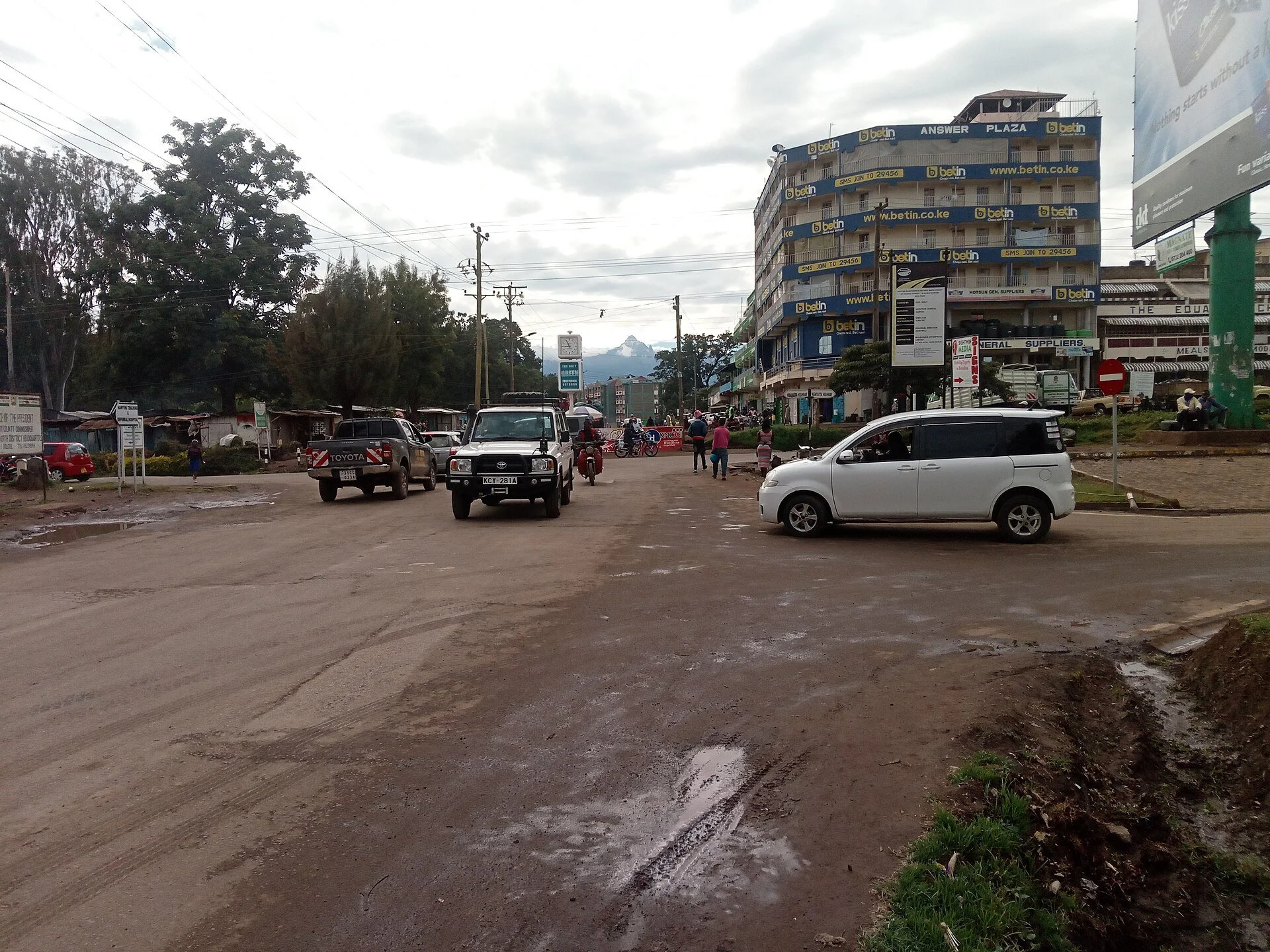
Nanyuki, Kenya, where residents have protested plans for a U.S.-backed Ebola quarantine facility near Laikipia Air Base. Photo by Martin Kithinji Mwirigi/Wikimedia Common
NAIROBI — On June 1, 2026, hundreds of people flooded the streets of Nanyuki, a quiet town in Laikipia County about 200 kilometres north of Nairobi, to protest a proposed US-backed Ebola quarantine facility at Laikipia Air Base. By the end of the second day of demonstrations, two people had been killed after police opened fire on protesters, including one near the perimeter of the air base.
The protests began at around 9 a.m. outside Quickmart Supermarket in Nanyuki, before spreading through the town as shops closed, streets emptied, and schools shut their doors. Protesters, many of them young people, marched chanting anti-government slogans and demanding an immediate halt to the project. Some lit fires and hurled stones at law enforcement officers, while police deployed water cannons and tear gas to disperse the crowds.
The trigger for the protests was a plan, confirmed by senior Trump administration officials, to establish a 50-bed Ebola quarantine facility at Laikipia Air Base for Americans exposed to the virus in Central Africa. Rather than allow exposed Americans in the region to return home, U.S. Secretary of State Marco Rubio said during a Cabinet meeting that “we cannot and will not allow any cases of Ebola to enter the United States.” Kenya became the alternative, with U.S. officials saying the facility would be staffed by personnel from the U.S. Public Health Service, even as Kenyan officials pushed for the site to serve people of all nationalities. For many residents in Nanyuki, the question was not only whether the facility was safe, but why their town had been chosen as America’s Ebola containment site.
The Katiba Institute, a constitutional rights organization, filed an urgent legal challenge over the facility, citing a lacked transparency, public participation, and parliamentary oversight. In its petition, the institute asked the court to determine whether the executive could expose the public to significant health risks without first complying with constitutional safeguards. High Court Judge Patricia Nyaundi later issued interim conservatory orders barring the government from building or beginning operations at the facility, and ordered it to disclose all agreements and operational protocols before the next hearing on June 23. Despite the court order, Reuters reported that U.S. equipment and personnel continued arriving at the site with the backing of Kenyan authorities, though Health Cabinet Secretary Aden Duale later said the government had suspended the project and would comply with the court.
On June 1, President William Ruto told reporters: “We are a responsible government. We know what we are doing”. He framed the facility as part of a wider national preparedness plan and a continuation of Kenya’s long-standing health partnership with Washington, noting that it would serve Kenyans and foreign nationals alike. He also urged Kenyans not to doubt the government’s preparedness. Separately, the US State Department had committed $13.5 million toward Kenya’s Ebola defense operations. The Law Society of Kenya and the Kenya Medical Practitioners, Pharmacists and Dentists Union (KMPDU) joined the challenge in court alongside Katiba Institute. KMPDU was equally unsparing. In a press statement issued on May 28, Secretary General Dr. Davji Atellah wrote: “ We will not sit back and watch Kenya be treated as a containment colony for a lethal pathogen that we did not generate.”
On May 5, 2026, the WHO received an alert about an unknown illness with high mortality in Mongbwalu Health Zone, in Ituri Province of the Democratic Republic of Congo (DRC), a high traffic mining area less than 500 kilometres from Uganda. What was actually spreading was something rarer: the Bundibugyo strain. On May 17, WHO Director General Adhanom Ghebreyesus declared the outbreak a Public Health Emergency of International Concern. The outbreak that precipitated all of this remains active and rapidly evolving. As of June 15, the European Centre for Disease Prevention and Control reported a total of 837 confirmed cases in the DRC, including 196 confirmed deaths, with 376 people hospitalized in isolation. Ituri remains the most affected province, with 767 confirmed cases across 20 health zones.
Kenya, which shares a border with Uganda and has served as a logistics hub for the regional response through Jomo Kenyatta International Airport, has recorded no confirmed Ebola cases. What makes this particularly alarming: there are no approved vaccines or treatments specifically designed for the Bundibugyo strain. The response depends entirely on isolation, contact tracking, and the trust of affected communities. Public health infrastructure works when communities trust it. Secret arrangements that designate a country as a holding zone for another nation's infectious disease risk corrode exactly that trust. Global health security cannot be built on a model where wealthier nations externalize risk to countries that did not create the crisis and have fewer resources to absorb it. That model is neither safe nor just, and the people of Kenya have made that clear.
A second round of demonstrations erupted on June 9, where at least one more person was shot dead by police who again deployed water cannons and tear gas against the crowds. The death toll from the two rounds of protest now stands at three and more than 10 protesters arrested.
The next court hearing is June 23, where the government must table all agreements and operational documents behind the deal. If it fails to do so, the conservatory orders are likely to be extended or made permanent. Kenya’s Parliament Health Committee has summoned the Health Cabinet Secretary Aden Duale to account for the terms of the arrangement. On the US side, Rubio walked back his original position on June 3, telling the Senate Appropriations subcommittee that the facility was for observation and terming the earlier controversy a “misunderstanding”. The US has made no formal statement on the two deaths in Nanyuki and has not confirmed whether the facility would serve non-American patients, as Ruto has claimed. Those silences are themselves an answer.
Author Bio: Chesang Rotich is a climate and sustainability professional working at the intersection of public policy and sustainable finance across East Africa and the United States. She is currently based in Nairobi, where she writes on climate, energy, and the politics of development across the continent