United States | Immigration & Migration
Article By Nicole Jacob
November 2, 2026 11:17 am EDT
Birthright Citizenship Fight Continues After Supreme Court Ruling
Just over a month after the Court’s ruling, the Trump administration issued two new executive orders seeking to impose additional restrictions on citizenship at birth and prevent birth tourism.
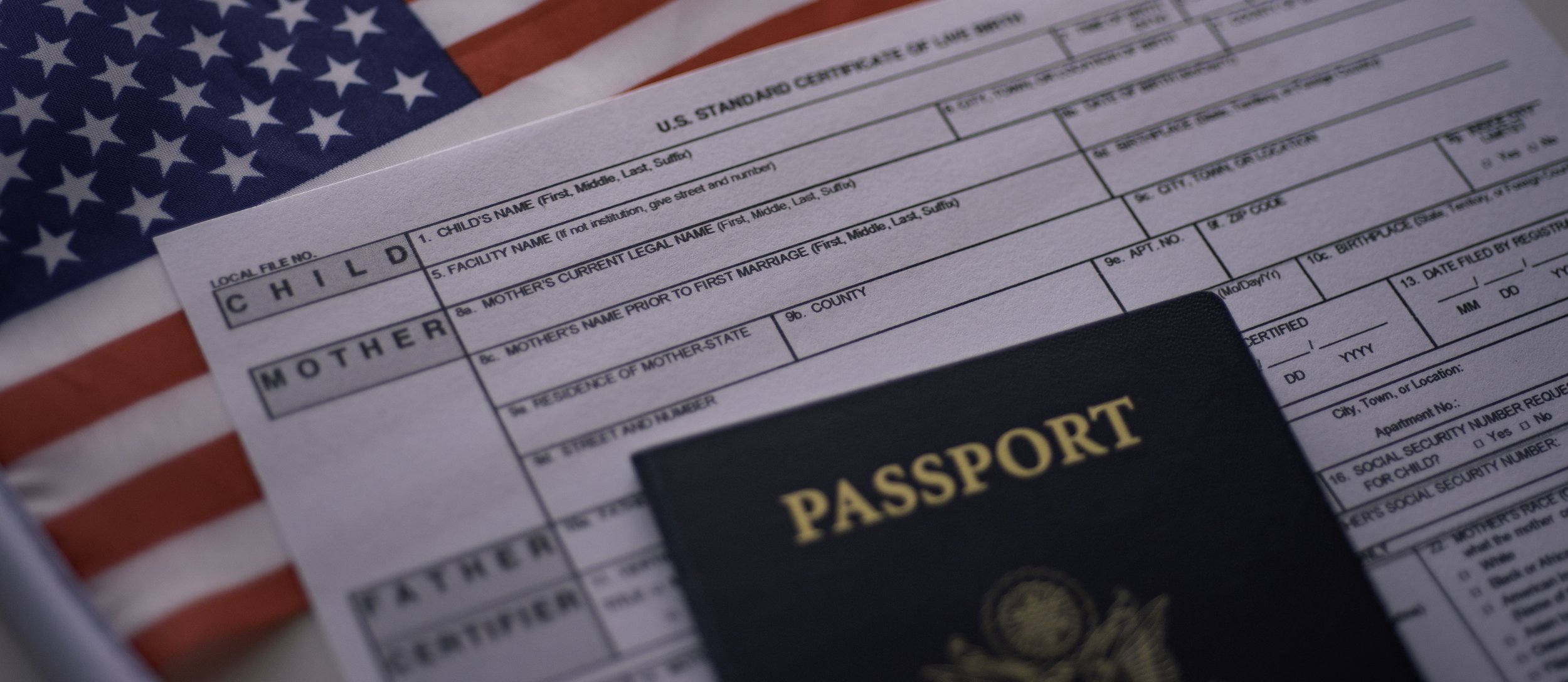
U.S. standard certificate of live birth application form next to American flag and Passport of USA. Photo: Gettyimages
On June 30, 2026, the Supreme Court ruled 6-3 in Trump v. Barbara that children born in the United States to parents who are in the country unlawfully or on temporary visas are citizens at birth under the Fourteenth Amendment. This decision invalidated President Donald Trump’s January 2025 Executive Order (EO) 14160, titled “Protecting the Meaning and Value of American Citizenship,” which would have denied recognition of citizenship to certain U.S.-born children based on their parents’ immigration status.
Following the Supreme Court’s ruling, the administration issued two new executive orders on August 6 in a renewed effort to restrict birthright citizenship. The first, EO 14418, seeks to deny recognition of citizenship to certain U.S.-born children whose parents are not U.S. citizens, including children of foreign government employees, individuals designated as terrorists, and parents who engaged in commercial transactions or fraudulent activities to obtain citizenship for their children. The second, EO 14419, seeks to prevent “birth tourism,” the practice of entering the United States on a temporary visa to give birth, by directing federal authorities to deny or revoke visas and restrict entry for individuals engaging in the practice.
The administration’s renewed effort to restrict birthright citizenship faced another legal setback on September 2, when U.S. District Judge Deborah Boardman issued a preliminary injunction prohibiting federal agencies from enforcing EO 14418 against children covered by the Supreme Court’s June ruling. Judge Boardman found that the order was almost certainly unconstitutional as applied to those children, whose right to citizenship had already been affirmed in Trump v. Barbara. The injunction does not permanently invalidate EO 14418 or resolve whether all of its proposed exceptions to birthright citizenship are constitutional.
The History of Birthright Citizenship
The legal basis for birthright citizenship comes from the Citizenship Clause of the Fourteenth Amendment, which was ratified in 1868 following the Civil War. The clause overturned the Supreme Court's 1857 decision in Dred Scott v. Sandford, which had denied citizenship to people of African descent, by establishing that “all persons born or naturalized in the United States, and subject to the jurisdiction thereof,” are citizens of the United States.
Three decades later, in 1898, the Supreme Court was asked to determine whether the Fourteenth Amendment's guarantee of birthright citizenship also applied to children born in the United States to Chinese nationals, who were prohibited under federal law from becoming naturalized citizens. The case, United States v. Wong Kim Ark, examined the citizenship status of Wong Kim Ark, who was born in San Francisco, California, to Chinese parents who lived and worked in the United States.
After returning from a trip to China in 1895, Wong was denied reentry on the grounds that he was not a U.S. citizen. Wong challenged the decision in the U.S. District Court for the Northern District of California, arguing that his birth in San Francisco entitled him to citizenship under the Fourteenth Amendment, regardless of his parents’ nationality. On January 3, 1896, District Judge William W. Morrow ruled in his favor, prompting the federal government to appeal to the Supreme Court. The Supreme Court ruled 6-2 in Wong’s favor, affirming the lower court’s decision that a person born in the United States to foreign parents permanently domiciled in the country acquires citizenship at birth. The Court did, however, recognize limited exceptions to birthright citizenship for children of foreign diplomats and children born to members of foreign military forces occupying U.S. territory. The Court’s decision was based on the common-law principle of jus soli, or citizenship based on place of birth.
The Trump administration has argued that the Fourteenth Amendment's phrase “subject to the jurisdiction thereof” excludes certain children born in the United States to parents who are in the country unlawfully or on temporary visas, an interpretation the Supreme Court rejected in Trump v. Barbara.
Trump v. Barbara
After President Trump issued EO 14160 on January 20, 2025, several parents filed lawsuits arguing that the order violated both the Fourteenth Amendment and the Immigration and Nationality Act. On July 10, 2025, the U.S. District Court for the District of New Hampshire allowed the lawsuit to proceed as a nationwide class action on behalf of children who would be denied citizenship under the order. The court also issued a preliminary injunction blocking its enforcement. The Trump administration appealed the ruling and petitioned the Supreme Court to hear the case before the federal appeals court issued a decision. The Supreme Court granted the administration's request on December 5, 2025.
The Supreme Court ultimately ruled 6-3 against the Trump administration, but the six justices did not agree on the legal reasoning behind the decision. Justices Clarence Thomas, Samuel Alito, and Neil Gorsuch dissented, arguing that the Fourteenth Amendment did not guarantee citizenship to all children born in the United States, although they differed on whether parental domicile or allegiance to the United States determined eligibility. Chief Justice John Roberts wrote the majority opinion, joined by Justices Sonia Sotomayor, Elena Kagan, Amy Coney Barrett, and Ketanji Brown Jackson. They held that EO 14160 violated the Fourteenth Amendment. Justice Brett Kavanaugh agreed that the executive order could not take effect but rejected the majority's constitutional reasoning. Instead, he concluded that the order conflicted with 8 U.S.C. § 1401(a), the federal statute governing citizenship at birth.
Justice Kavanaugh further argued in his opinion that Congress could amend federal law to establish additional exceptions to birthright citizenship without violating the Fourteenth Amendment.
Efforts to Restrict Birthright Citizenship
On July 9, Rep. John McGuire (R-VA-05) introduced the Birthright Citizenship Clarification Act of 2026, which, if enacted, would amend federal citizenship law to exclude certain U.S.-born children based on their parents’ immigration status. In a press release announcing the legislation, Rep. McGuire argued that foreign nationals had exploited birthright citizenship through practices such as birth tourism. The bill has five Republican cosponsors: Reps. Austin Scott (R-GA-08), Derrick Van Orden (R-WI-03), Dan Meuser (R-PA-09), Tim Moore (R-NC-14), and Bob Onder (R-MO-03).
“For too long, foreign nationals have exploited the process of birthright citizenship through loopholes like birth tourism, devaluing what it means to be an American,” – Rep. John McGuire
Four days after Rep. McGuire introduced his bill, Sen. Jim Banks (R-IN) introduced his own, the Citizenship Act of 2026, a proposal to classify “any person who enters the United States without authorization or for the purpose of engaging in birth tourism as invaders,” thereby excluding their children from birthright citizenship. Two days later, during an interview with Elizabeth MacDonald on Fox Business Network, Banks said he was “taking a page right out of Justice Kavanaugh’s playbook in his concurring opinion that Congress must act. ... The Supreme Court doesn’t determine what an invasion is; Congress and the President do.”
As of November 2, neither Rep. McGuire’s nor Sen. Banks’ bill has advanced beyond committee referral.
The Federation for American Immigration Reform (FAIR), a Washington, D.C.–based nonprofit founded in 1979 that advocates for stricter immigration policies, reported filing at least 14 amicus briefs in federal district and appellate courts in support of EO 14160. FAIR submitted an amicus brief to the Supreme Court on January 27, 2026, arguing that the Fourteenth Amendment's guarantee of citizenship did not extend to children born in the United States whose parents lacked permission to reside in the country. Additionally, America First Legal (AFL), a conservative nonprofit legal organization founded in 2021 by former Trump administration officials, including Stephen Miller, filed an amicus brief on behalf of 12 Republican senators and 16 Republican representatives, stating that birthright citizenship requires lawful presence, allegiance, and domicile in the United States.
Opposing these efforts, the ACLU, its New Hampshire, Maine, and Massachusetts affiliates, the Legal Defense Fund, Asian Law Caucus, and Democracy Defenders Fund represented families challenging EO 14160. Their lawsuit, Barbara v. Trump, eventually reached the Supreme Court, which ruled in their favor on June 30, 2026.
The Road Ahead
Judge Deborah Boardman’s September 2 preliminary injunction prevents the Trump administration from enforcing EO 14418 against children whose citizenship was affirmed by the Supreme Court’s decision in Trump v. Barbara. The order has not been permanently struck down, and the administration can continue challenging the injunction in court. After Judge Boardman’s ruling, Attorney General Todd Blanche said during an interview with Fox News that the administration would continue fighting the decision. “We’ll continue to fight, as President Trump has talked about for many years, and if we have to go back to the Supreme Court, we will,” said Blanche.
Rep. McGuire’s and Sen. Banks’ proposals offer the Trump administration another possible route for restricting birthright citizenship through congressional legislation. However, neither bill has advanced beyond committee referral, and Congress has not indicated whether it will consider either proposal.
Author Bio: Nicole Jacob is a Master of International Affairs candidate at Columbia University’s School of International and Public Affairs, with a focus on international security. Her research interests focus on how youth employment and migration influence political stability in emerging markets.
Read More

Scripture as Literature: Texas’ New Reading List Puts the First Amendment on the Syllabus
October 1, 2026
By Lila Li
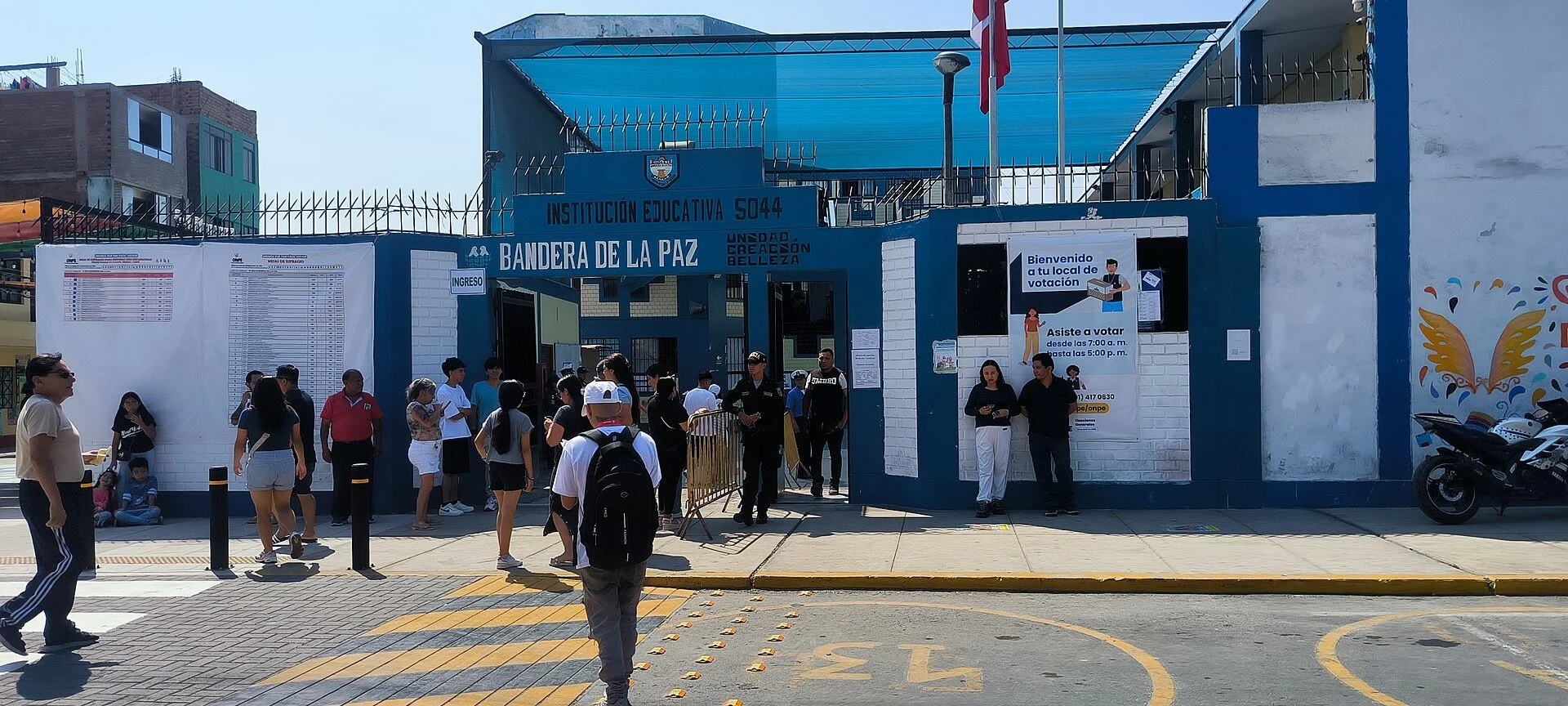
Peru Awaits Official Results as Fujimori Maintains Narrow Lead in Presidential Runoff
June 23, 2026
By Veronica Martin